Which Of The Following Is True When Using Job Costing At A Service Firm
Which Of The Following Is True When Using Job Costing At A Service Firm. Staff have no interest in customers while there. Job order costing assists managers in their planning, controlling, decision making and performance evaluations functions.
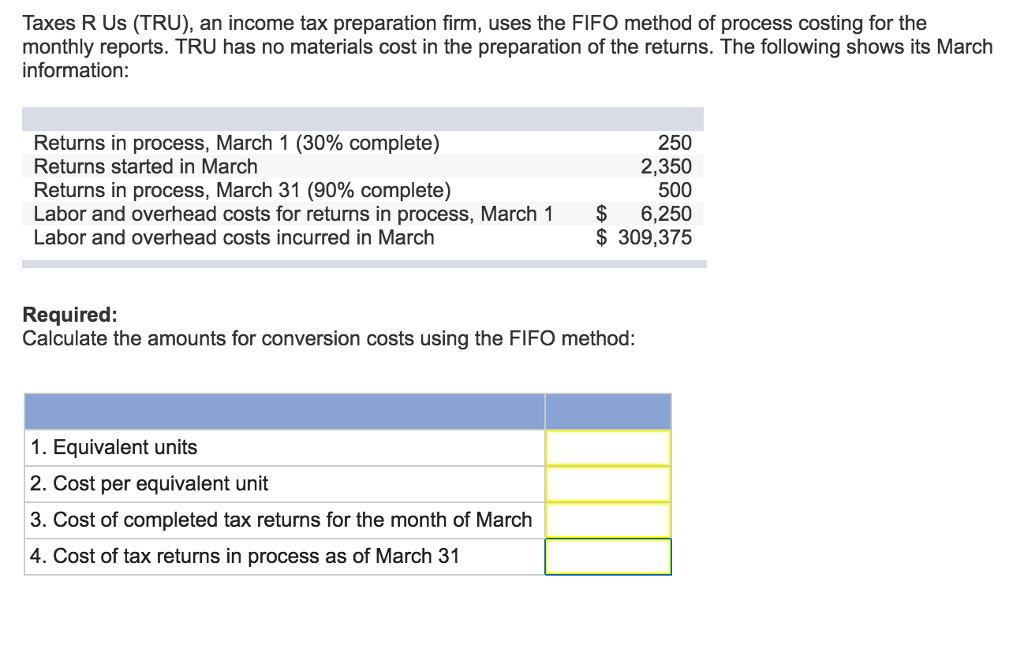
Solved Taxes R Us (TRU), An Tax Preparation Firm from www.chegg.com
Staff do not come into direct contact with customers. A) job costing is used when each unit of output is identical, and process costing deals with unique products. Credit and collection b floor area occupied 3.
C) Process Costing Is Used When Each Unit Of Output Is Identical, And Job Costing Deals With Unique.
A, b, and c are all true Warehouse rent c a percentage of cash collection B) because erp systems track costs more efficiently, the benefit from the cost information outweighs the cost of obtaining the information.
Process Costing Computes And Allocates An Equal Amount Of Cost To Each Product.
Credit and collection b floor area occupied 3. Process costing (2.) contract printer that produces posters, books, and pamphlets to order; A) job costing is used when each unit of output is identical, and process costing deals with unique products.
Which Of The Following Is True When Using Job Costing At Aservice Firm?
Production overhead is absorbed at the rate of $8.50 per machine hour. Which of the following is true when using job costing at a professional service firm? Job order costing assists managers in their planning, controlling, decision making and performance evaluations functions.
Both Direct And Indirect Costs Are Assigned To Clientjobs.
Which of the following statements is true? Which of the following statements is true? Both a and b are true e.
4 Which Of The Following Is A Reason Why A Job Order Costing System Is Appropriate For A.
B) job costing is used when each unit of output is identical and not produced in batches, and process costing deals with unique products produced on large scale. (a) job costing (b) batch costing (c) contract costing (d) none of the above. A) analysis of tradeoffs b) sensitivity analysis